A Request for Your Support
The Education Culture Security Foundation is a public interest incorporated foundation that runs preservation programs to document historic buildings and cultural properties in 3D, cultural programs set at cultural properties, and AI literacy education programs. These activities are supported by your donations.
What These Amounts Can Do
Note: These amounts are illustrative figures based on the Fiscal 2025 (Reiwa 7) Business Plan and Budget. Donations received are applied to the foundation's public-interest programs.
Why You Can Give with Confidence
How to Donate
We accept donations by credit card or bank transfer.
For Individuals
Each donation provides vital support for AI literacy education and the preservation and documentation of cultural heritage.
Note: If you would like to give a different amount, please Contact Us.
- Monthly payments are made automatically by credit card
- You can change the amount or cancel at any time through Contact Us
- We issue a donation receipt (certificate of receipt)
For Companies and Organizations
Companies and organizations can donate to support the preservation of cultural properties and AI literacy education.
As with donations from individuals, your donations are allocated to building the foundations for AI literacy education and preserving and documenting cultural heritage as public-interest programs. Logo placement and acknowledgments are expressions of gratitude, not the sale of advertising space.
- Acknowledgments: At your request, we will feature your name or logo in the foundation's publicity materials. The foundation determines how they will appear.
- Donation Receipt Certificate: We issue a receipt that can be used when applying for tax benefits.
Note: Placement is an expression of gratitude for your donation, not consideration in return. Whether or how an acknowledgment appears does not vary with the donation amount.
Donation AmountSelecting an amount takes you to the card payment page (Stripe).
Note: We also welcome inquiries about other amounts and ongoing monthly donations. Please contact us below.
Payment by Invoice or Bank Transfer is also available on request. We issue receipts (donation receipt certificates).
- AIL Certification as staff training You can consult us about introducing AIL Certification as AI literacy training for your employees.
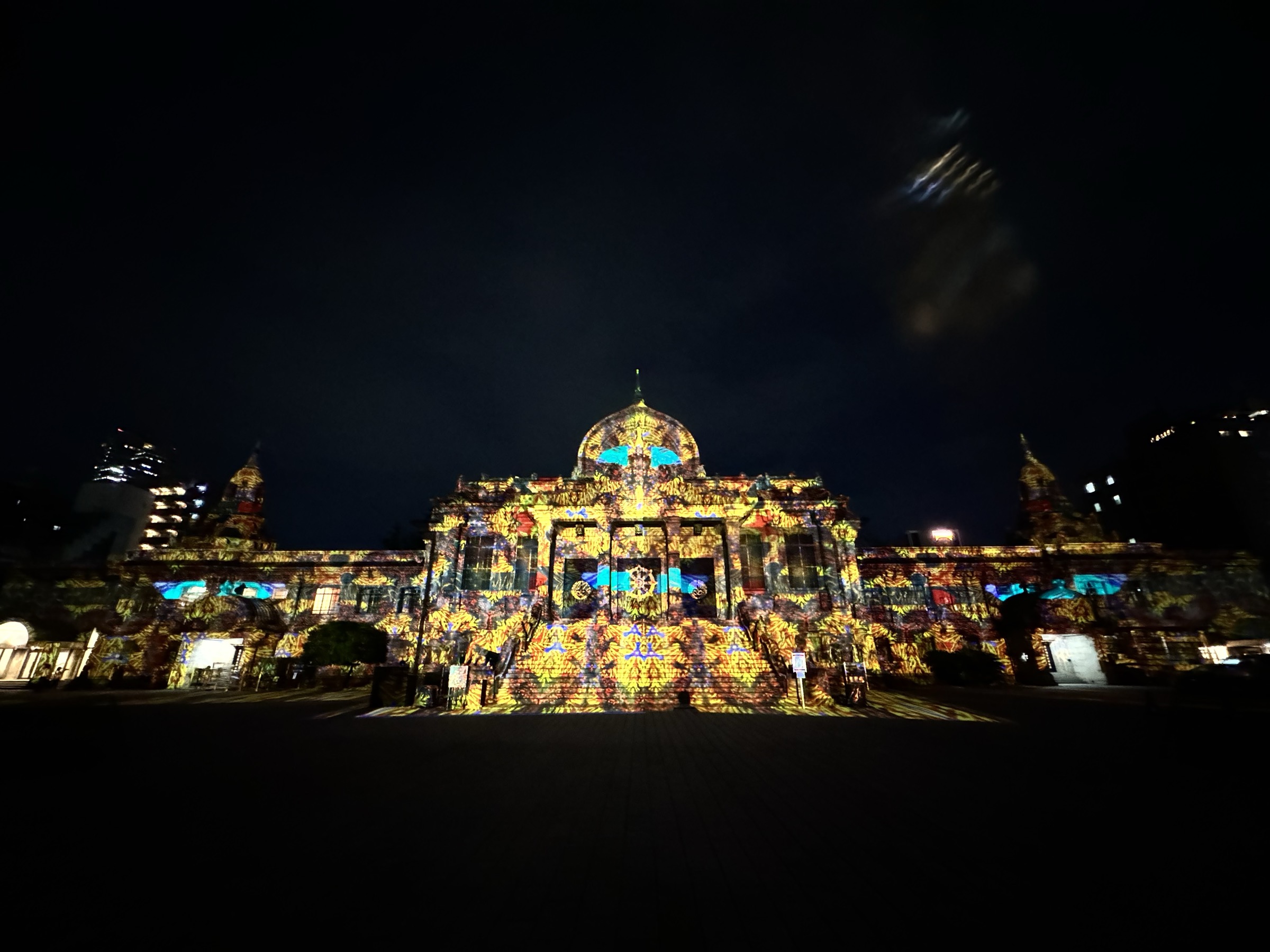
- Venue sponsorship Your company can sponsor events held at cultural heritage sites, such as projection mapping.
Note: Training is arranged under a separate agreement from donations. Please contact us for details.
Donating by Bank Transfer
Important Notes
• Please cover the bank transfer fee.
• After making the transfer, please provide your name and address, contact details, and donation amount using the form below. We will mail your receipt.
(Please enter your address in the form's message field.)
For supporters in the United States
You can give through the same donation payment page already offered on this site. Donations go directly to our Japanese public-interest foundation.
These gifts are not eligible for tax deductions outside Japan.
Donation Deductions under Japanese Tax Law
Donations to public interest incorporated foundations qualify for preferential treatment under Japanese tax law.
Tax Benefits for Donations to a Public Interest Incorporated Foundation
Our foundation is certified as a public interest incorporated foundation, and designates the preservation of historical and cultural resources and educational outreach as public-interest programs. The following Japanese tax benefits apply.
Deductions for Individuals
Donations to public interest incorporated foundations are eligible for an income deduction as “specified donations” (annual total donations minus JPY 2,000 are deducted from income, subject to a limit of 40% of total income).
We will provide information about tax credits once we obtain certification as an organization eligible for tax credits.
Income Deduction (Donation Deduction)
Note: The limit is 40% of total income. Tax is reduced by the deduction amount multiplied by the applicable tax rate.
If your income tax rate is 20% and you donate ¥10,000, your income tax goes down by about ¥1,600.
(¥10,000 − ¥2,000) × 20% = ¥1,600
Note: This assumes the ¥10,000 is your only donation that year. Tax rates depend on taxable income. The special reconstruction income tax and resident tax are not included.
Note: For resident tax, relief of up to 10% (4% prefectural + 6% municipal) may also be available if your local government has designated the foundation by ordinance.
Deductions for Corporations
Corporations can deduct donations to public interest incorporated foundations as expenses under a separate allowance from ordinary donations.
Special Deductible Expense Limit
Note: The ordinary donation deductible expense limit also applies separately from the special limit above.
Ordinary Donation Deductible Expense Limit
Note: Please consult your local tax office or a tax accountant for details. A receipt issued by the foundation is required to claim a deduction.
Receipt Issuance
We issue donors a receipt (donation receipt certificate) required for filing a tax return. For credit card payments, it is mailed after payment confirmation; for bank transfers, after receipt of funds is confirmed. Consolidated year-end receipts are also available. Please contact us if you would like one.
What Your Support Makes Possible
Preservation of Historic Buildings
We document historic buildings across Japan, 5–8 per year, using 3D laser scanning and preserve the records using blockchain technology. The data also supports education and research institutions and restoration following disasters.
Fiscal 2025 (Reiwa 7) Budget JPY 3,000,000 / approximately JPY 380,000–600,000 per property
Cultural Education and Outreach
We deliver visiting lessons at elementary, junior high, and senior high schools 8–12 times per year, and workshops for children 2–3 times per year, with 350 participants annually. We also produce 3–5 online learning resources each year.
Fiscal 2025 (Reiwa 7) Budget JPY 2,000,000 / approximately JPY 5,700 per participant
Contributions to Local Communities
We hold visual presentation events for local communities 4–6 times per year, and guided cultural property tours accompanied by specialists 3–4 times per year, with 300 participants annually.
Fiscal 2025 (Reiwa 7) Budget JPY 1,500,000 / approximately JPY 5,000 per participant
Note: The frequencies, participant numbers, and budgets above are planned figures based on the Fiscal 2025 (Reiwa 7) Business Plan and Budget.
The fiscal 2026 (Reiwa 8, August 2026–July 2027) plan is being prepared for publication, so these figures use the fiscal 2025 plan, the latest published materials, as their basis.
The original documents are available on the Public Disclosures page.
Where Your Donations Go
Building on our fiscal 2025 (Reiwa 7) activities, in fiscal 2026 (Reiwa 8) our two priority programs are building the foundations for AI literacy education and preserving and documenting cultural heritage.
AIL Certification Developing Human Foundations in the AI Age
AI literacy is not simply the technical ability to use AI. It means retaining the values that matter to us as human beings in an age of living alongside AI, and developing the ability to make our own judgments and take our own actions. The foundations for this are NSV (the foundation of values) and SP (the foundation of action). While conventional AI certifications assess “knowledge, operation, and efficiency,” this certification assesses “values, judgment, responsibility, and action.”
Digital Archives Preserving Records Against Tampering
Using 3D scanning and photogrammetry, we document the entire spaces of cultural properties, including colors and materials. Records are managed through a distributed network that does not depend on a particular administrator and preserved in a form protected against tampering.
Note: The certification levels and assessment pillars are published on our AIL Certification page, and the technical foundations of our digital archives are published on the Preservation Programs page.
The fiscal 2026 (Reiwa 8, August 2026–July 2027) Business Plan and Budget are being prepared for publication. Published plans and budgets are available on the Public Disclosures page.
Donation FAQs
Will I receive a receipt (donation receipt certificate)?
Are tax benefits available?
We will provide information about tax credits once we obtain certification as an organization eligible for tax credits. Please consult your local tax office or a tax accountant for details.
What is the minimum donation?
How will my donation be used?
How can I stop my monthly donation?
Can a company pay by invoice?
Do I need to contact you after donating by bank transfer?
The Foundation's Main Activities
We combine digital technology with education and international exchange to promote the preservation of cultural properties and the revitalization of local communities from multiple perspectives.
Research and Collection of Materials
Researching and collecting information on advanced examples of cultural property preservation and digital archives
Technology Development and Research
Developing technology for the long-term preservation of 3D measurement data and its use in education and research
Exhibitions and Hands-On Events
Holding immersive digital art events and exhibitions at historic buildings
Educational Programs
Planning and running visiting lessons in cooperation with schools and cultural learning experiences for local residents